
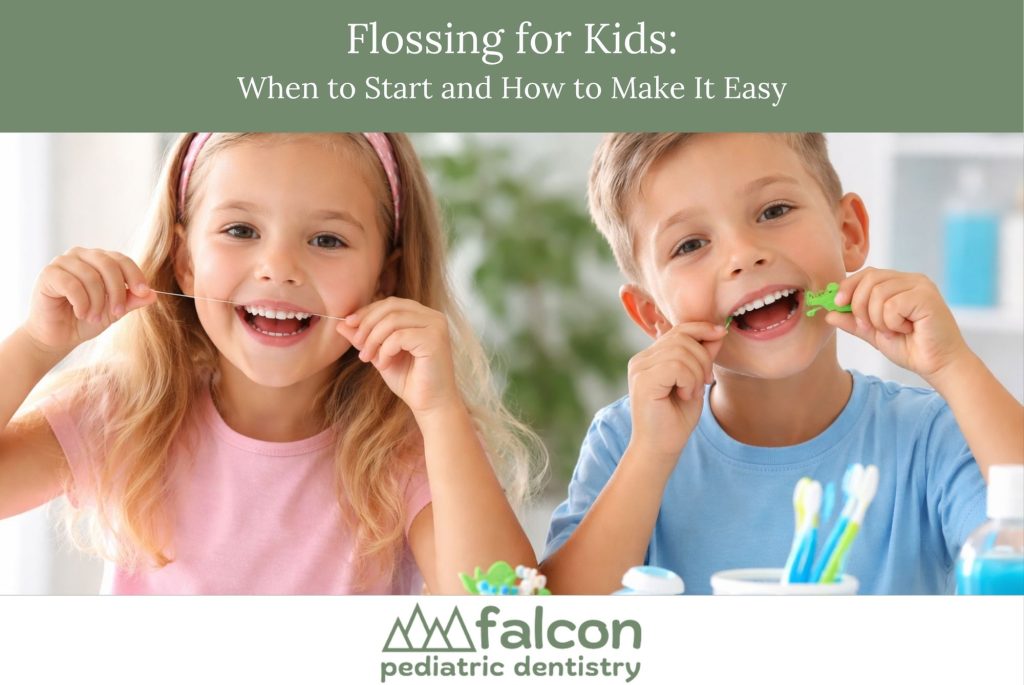
Good oral hygiene habits begin early—and flossing is one of the most important, yet often overlooked, parts of a child’s dental routine. At Falcon Pediatric Dentistry, we believe that teaching kids how to floss properly sets the foundation for a lifetime of healthy smiles. If you’ve ever wondered when to start flossing your child’s teeth and how to make it easier (and less of a struggle), you’re in the right place.
Why Flossing Matters for Kids
Brushing alone only cleans about 60% of the tooth surface. The remaining 40%—especially between teeth—is where food particles and plaque love to hide. Without flossing, these areas become prime spots for:
- Cavities (tooth decay)
- Gum inflammation (gingivitis)
- Bad breath
- Long-term dental issues
For children, whose teeth are still developing, preventing decay early is critical to avoiding more serious problems later on.
When Should Kids Start Flossing?
A simple rule: Start flossing as soon as two teeth touch.
This often happens between ages 2 and 3, but it can vary from child to child. Once teeth are close enough that a toothbrush can’t reach between them, flossing becomes necessary.
At first, parents should handle flossing. Most children don’t develop the dexterity to floss independently until around ages 8–10.
How to Floss Your Child’s Teeth Properly
Here’s a step-by-step guide to make sure flossing is effective and safe:
- Use about 18 inches of floss
- Wrap most of it around your middle fingers
- Gently slide the floss between teeth
- Curve it into a “C” shape against each tooth
- Move it up and down to clean the sides
- Use a clean section of floss for each tooth
Be gentle—forcing floss can hurt gums and create negative associations.
Tips to Make Flossing Easy (and Fun!)
Let’s be honest—getting kids to floss isn’t always easy. The key is consistency and creativity.
1. Use Kid-Friendly Flossers
Floss picks designed for children are easier to hold and often come in fun colors or shapes.
2. Make It a Game
Turn flossing into a challenge or race. Use a timer or reward system to keep kids engaged.
3. Lead by Example
Kids imitate what they see. If they watch you floss daily, they’re more likely to follow along.
4. Create a Routine
Floss at the same time every day—usually before bedtime brushing—to build habit consistency.
5. Use Positive Reinforcement
Praise, stickers, or small rewards can go a long way in encouraging good habits.
6. Play Music or Videos
Let your child watch a short video or listen to their favorite song while flossing to make it enjoyable.
Common Mistakes Parents Should Avoid
- Waiting too long to start flossing
- Letting kids floss alone too early
- Skipping flossing when teeth look “clean”
- Using improper technique that misses plaque buildup
Consistency matters more than perfection—daily flossing is the goal.
The Role of Professional Dental Care
Even with great at-home care, regular dental visits are essential. At Falcon Pediatric Dentistry, we:
- Monitor your child’s oral development
- Provide professional cleanings
- Catch early signs of cavities or gum issues
- Offer personalized hygiene tips for your child
Our goal is to make dental care a positive experience for both kids and parents.
Q&A: Flossing for Kids
Q: How often should kids floss?
A: Once a day is recommended, ideally before bedtime.
Q: What if my child refuses to floss?
A: Try making it fun with games, flavored floss, or reward systems. Consistency and patience are key.
Q: Are floss picks as effective as string floss?
A: Yes, especially for kids. The most important thing is that flossing is done daily and properly.
Q: Can flossing hurt my child’s gums?
A: If done too aggressively, yes. Gentle technique prevents discomfort and builds positive habits.
Q: When can my child floss on their own?
A: Most children can floss independently around ages 8–10, but supervision is still recommended.
Q: Is flossing really necessary for baby teeth?
A: Absolutely. Healthy baby teeth are crucial for proper speech, nutrition, and guiding permanent teeth.
Q: What type of floss is best for kids?
A: Soft, flexible floss or kid-friendly floss picks with handles are ideal.
Build Healthy Habits Early
Teaching your child to floss doesn’t have to be a daily battle. With the right tools, techniques, and encouragement, it can become a simple and even enjoyable part of their routine. Starting early helps prevent cavities, promotes healthy gums, and sets your child up for long-term dental success.
Contact Us Today!
Falcon Pediatric Dentistry
📍 11555 Meridian Market View
Falcon, CO 80831
📞 Phone: (719) 749-9001
🌐 Visit our website: falconpediatricdentistry.com
📅 Book An Appointment