
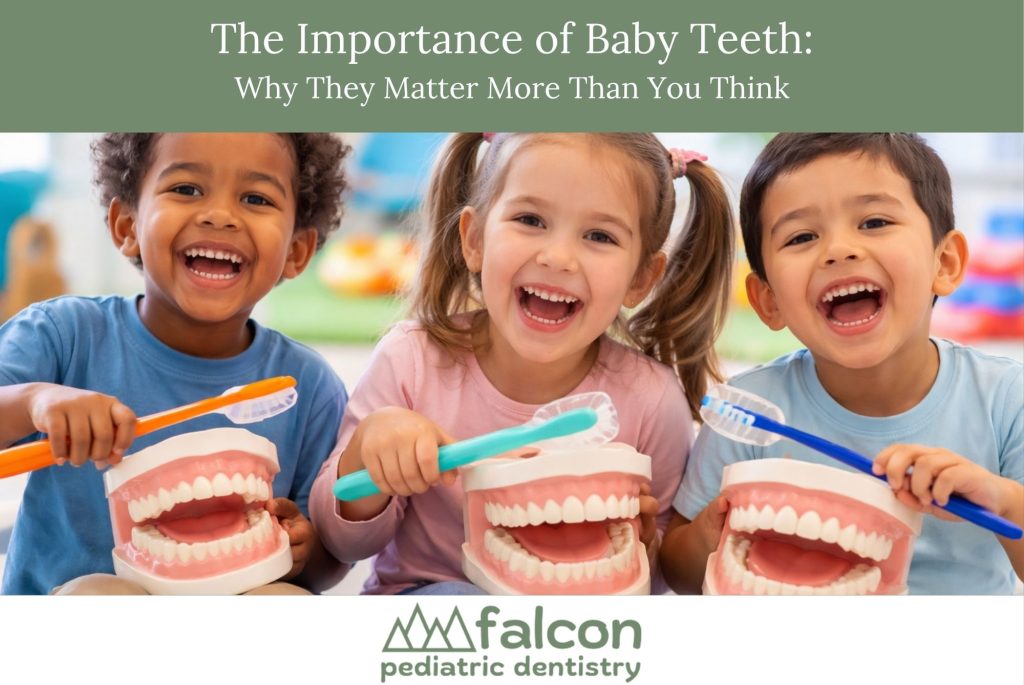
When it comes to children’s dental health, many parents assume that baby teeth (also known as primary teeth) aren’t all that important because they eventually fall out. However, this common misconception can lead to long-term oral health problems. At Falcon Pediatric Dentistry, we emphasize that baby teeth play a critical role in your child’s development, overall health, and future smile.
In this comprehensive guide, we’ll explore why baby teeth matter more than you think, how to care for them, and what every parent should know to keep their child’s smile healthy from the very start.
What Are Baby Teeth and When Do They Appear?
Baby teeth are the first set of teeth your child develops. Most children begin teething around 6 months of age, and by age 3, they typically have a full set of 20 primary teeth.
These teeth remain in place until they gradually fall out between ages 6 and 12, making way for permanent adult teeth.
Why Baby Teeth Are So Important
1. They Help With Proper Nutrition
Healthy baby teeth allow children to chew food properly, which is essential for good digestion and nutrition. Painful or decayed teeth can make eating difficult, leading to poor dietary habits.
2. They Support Speech Development
Baby teeth play a key role in helping children learn to speak clearly. Missing or damaged teeth can interfere with pronunciation and language development.
3. They Hold Space for Adult Teeth
Primary teeth act as placeholders for permanent teeth. If a baby tooth is lost too early due to decay or injury, nearby teeth can shift into the empty space, potentially causing crowding or misalignment when adult teeth come in.
4. They Influence Confidence and Social Development
A healthy smile helps children feel confident. Dental issues can affect a child’s self-esteem, especially as they grow older and become more socially aware.
5. They Prevent Future Dental Problems
Tooth decay in baby teeth can lead to infections that affect developing adult teeth underneath. Maintaining healthy primary teeth reduces the risk of more complex dental problems later on.
What Happens If Baby Teeth Are Neglected?
Ignoring baby teeth can lead to a range of problems, including:
- Cavities and tooth decay
- Pain and infection
- Difficulty eating or speaking
- Premature tooth loss
- Misaligned permanent teeth
- Increased need for orthodontic treatment
Early dental care is far easier—and less costly—than treating advanced dental issues later.
How to Care for Your Child’s Baby Teeth
Start Early
Begin cleaning your baby’s gums even before teeth appear using a soft cloth. Once teeth erupt, use a small, soft-bristled toothbrush.
Use Fluoride Toothpaste
A rice-sized amount for infants and a pea-sized amount for older children helps protect against cavities.
Establish Healthy Habits
Encourage brushing twice daily and flossing once teeth begin to touch.
Limit Sugary Foods and Drinks
Frequent sugar exposure increases the risk of cavities. Opt for water and healthy snacks whenever possible.
Schedule Regular Dental Visits
The American Academy of Pediatric Dentistry recommends a child’s first dental visit by their first birthday. Routine checkups help catch problems early.
The Role of Pediatric Dentistry
Pediatric dentists specialize in caring for children’s teeth, gums, and oral health at every stage of development. At Falcon Pediatric Dentistry, our team creates a comfortable, kid-friendly environment to help children feel at ease while receiving high-quality dental care.
We focus on prevention, education, and early intervention to ensure your child’s smile stays healthy for years to come.
Signs Your Child May Need to See a Dentist
Watch for these warning signs:
- Tooth pain or sensitivity
- White or dark spots on teeth
- Swelling or redness in the gums
- Difficulty chewing
- Early loss of a baby tooth
If you notice any of these symptoms, it’s important to schedule a dental appointment promptly.
Comprehensive Q&A Section
Q: Do baby teeth really matter if they fall out anyway?
Yes. Baby teeth are essential for eating, speaking, and guiding permanent teeth into place. Neglecting them can lead to long-term dental issues.
Q: When should my child first see a dentist?
Children should visit a dentist by their first birthday or within six months of their first tooth appearing.
Q: How can I prevent cavities in my child’s teeth?
Regular brushing, limiting sugary foods, fluoride use, and routine dental visits are key to preventing cavities.
Q: What happens if a baby tooth gets a cavity?
Cavities should be treated promptly. Untreated decay can spread, cause pain, and affect permanent teeth.
Q: Is thumb sucking harmful to baby teeth?
Thumb sucking is normal in infants but can cause alignment issues if it continues beyond age 3–4.
Q: Are dental X-rays safe for children?
Yes. Pediatric dentists use minimal radiation and protective measures to ensure safety.
Q: What should I do if my child knocks out a baby tooth?
Contact your pediatric dentist immediately. Baby teeth are usually not reinserted, but evaluation is important.
Q: How often should my child visit the dentist?
Most children should visit every six months for routine checkups and cleanings.
Q: Can baby teeth infections affect overall health?
Yes. Oral infections can spread and impact overall health, making early treatment critical.
Q: When do baby teeth start falling out?
Typically around age 6, continuing until about age 12.
Give Your Child a Healthy Start
Baby teeth are the foundation for a lifetime of healthy smiles. By prioritizing early dental care and regular visits, you can help your child avoid unnecessary pain and set them up for long-term oral health success.
At Falcon Pediatric Dentistry, we’re here to partner with you every step of the way.
Contact Us Today!
Falcon Pediatric Dentistry
📍 11555 Meridian Market View
Falcon, CO 80831
📞 Phone: (719) 749-9001
🌐 Visit our website: falconpediatricdentistry.com
📅 Book An Appointment