
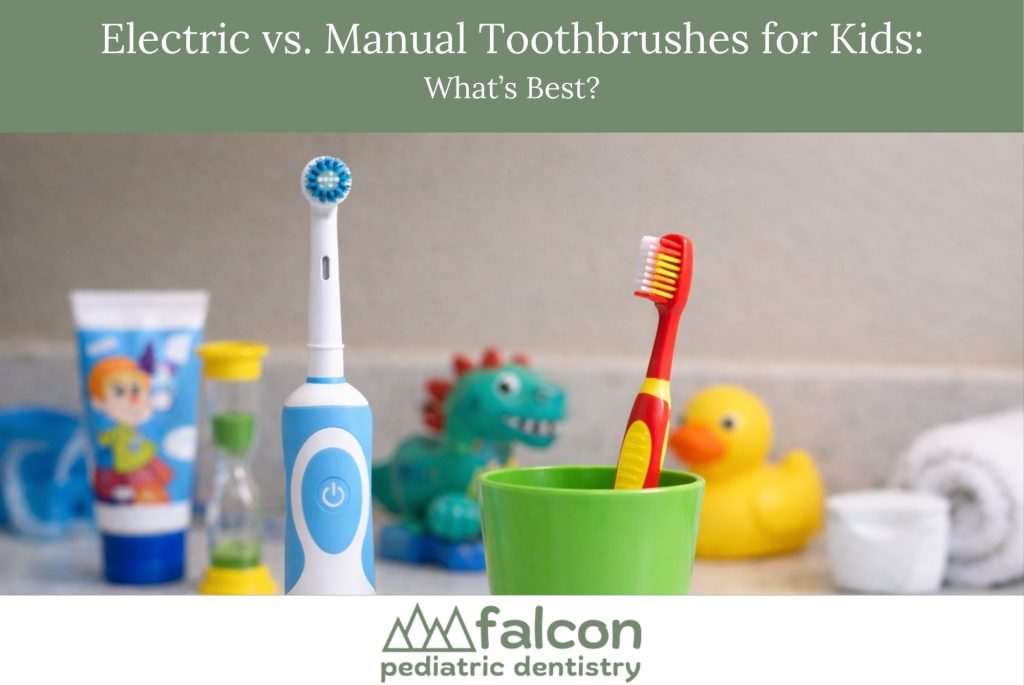
When it comes to your child’s oral health, one of the most common questions parents ask is: Should my child use an electric toothbrush or a manual one? At Falcon Pediatric Dentistry, we understand how important it is to build strong dental habits early—and choosing the right toothbrush plays a big role in that.
In this comprehensive guide, we’ll break down the pros and cons of both electric and manual toothbrushes for kids, helping you make the best decision for your child’s smile.
Why Choosing the Right Toothbrush Matters
Children are still developing their brushing skills, coordination, and consistency. A toothbrush that is effective, comfortable, and engaging can make all the difference in preventing cavities, gum disease, and long-term oral health issues.
Electric Toothbrushes for Kids
Benefits of Electric Toothbrushes
1. Superior Plaque Removal
Electric toothbrushes are designed with oscillating or vibrating heads that can remove more plaque than manual brushing—especially helpful for kids who may not brush thoroughly.
2. Built-In Timers
Many electric toothbrushes include timers that encourage children to brush for the dentist-recommended two minutes.
3. Easier for Young Children
Since the brush does most of the work, electric toothbrushes are ideal for younger kids who lack fine motor skills.
4. Fun and Engaging
With lights, music, and favorite characters, electric toothbrushes can make brushing feel like a fun activity rather than a chore.
Drawbacks of Electric Toothbrushes
- Higher upfront cost
- Requires charging or batteries
- Can be too powerful for very young or sensitive children if not used properly
Manual Toothbrushes for Kids
Benefits of Manual Toothbrushes
1. Affordable and Accessible
Manual toothbrushes are budget-friendly and widely available.
2. Easy to Travel With
No need for charging—just grab and go.
3. Better Control
Some children (especially older kids) may prefer the control and gentleness of manual brushing.
Drawbacks of Manual Toothbrushes
- Less effective plaque removal if brushing technique is poor
- No built-in timers or guidance
- Relies heavily on the child’s brushing habits and consistency
Which Is Better for Your Child?
The truth is—both electric and manual toothbrushes can be effective when used properly. The best choice depends on your child’s age, personality, and brushing habits.
Choose an Electric Toothbrush if:
- Your child struggles to brush thoroughly
- You want to make brushing more fun
- Your child needs help brushing for the full two minutes
Choose a Manual Toothbrush if:
- Your child already has good brushing technique
- You’re looking for a simple, cost-effective option
- Your child prefers a gentler brushing experience
Tips for Helping Kids Brush Effectively
No matter which toothbrush you choose, these tips will help ensure your child maintains excellent oral hygiene:
- Brush twice a day for two minutes
- Use a pea-sized amount of fluoride toothpaste
- Supervise brushing until age 7–8
- Replace toothbrushes every 3 months
- Make brushing part of a consistent routine
Pediatric Dentist Recommendation
At Falcon Pediatric Dentistry, we often recommend electric toothbrushes for younger children or those who need extra help brushing effectively. However, the most important factor is consistency—the best toothbrush is the one your child will use properly every day.
Frequently Asked Questions (Q&A)
1. At what age can my child start using an electric toothbrush?
Most children can start using an electric toothbrush around age 3, with parental supervision. Always choose a child-friendly model with soft bristles.
2. Are electric toothbrushes safe for kids?
Yes, electric toothbrushes are safe when used correctly. Look for brushes specifically designed for children with gentle settings.
3. Do electric toothbrushes really clean better?
Studies show electric toothbrushes can remove more plaque than manual ones, especially for children who struggle with brushing technique.
4. How often should I replace my child’s toothbrush?
Every 3 months—or sooner if the bristles are frayed or after your child has been sick.
5. What type of toothbrush bristles are best for kids?
Soft bristles are always recommended to protect developing teeth and sensitive gums.
6. How can I make brushing more fun for my child?
Try using a toothbrush with their favorite character, play music, or use apps that turn brushing into a game.
7. Should parents still help older kids brush?
Yes. Even older children benefit from occasional supervision to ensure proper technique and coverage.
Schedule Your Child’s Dental Visit Today!
A great toothbrush is only part of the equation—regular dental checkups are essential for maintaining a healthy smile. Our friendly team at Falcon Pediatric Dentistry is here to support your child’s oral health every step of the way.
Contact Us Today!
Falcon Pediatric Dentistry
📍 11555 Meridian Market View
Falcon, CO 80831
📞 Phone: (719) 749-9001
🌐 Visit our website: falconpediatricdentistry.com
📅 Book An Appointment