
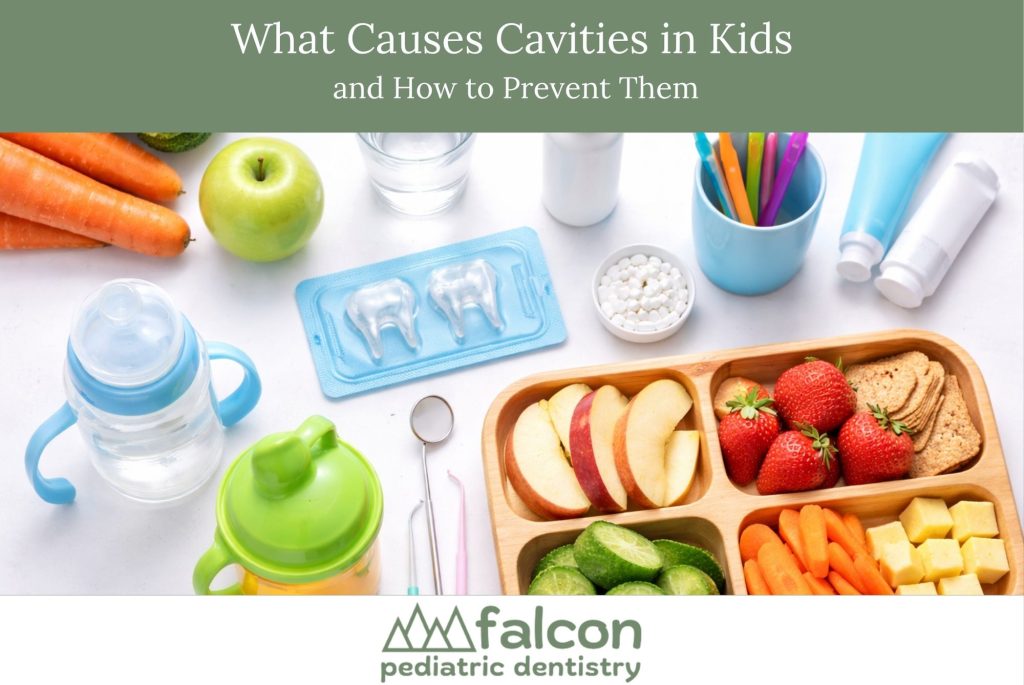
Cavities are one of the most common chronic childhood conditions—but the good news is they are largely preventable. At Falcon Pediatric Dentistry, we believe that education is the first step toward protecting your child’s smile. Understanding what causes cavities and how to prevent them can make a lasting difference in your child’s oral health.
What Are Cavities?
Cavities, also known as dental caries or tooth decay, are permanently damaged areas in the enamel (the hard outer layer of the teeth). They develop when bacteria in the mouth produce acids that gradually break down tooth structure.
Children are especially vulnerable because their enamel is thinner and they may not yet have strong oral hygiene habits.
What Causes Cavities in Kids?
1. Sugary Foods and Drinks
Frequent consumption of sugary snacks, juice, soda, and even sticky foods like gummies feeds harmful bacteria in the mouth. These bacteria produce acid that attacks tooth enamel.
2. Poor Oral Hygiene
When brushing and flossing are inconsistent or ineffective, plaque builds up on teeth. Plaque is a sticky film of bacteria that leads directly to decay.
3. Frequent Snacking
Constant snacking doesn’t give teeth time to recover from acid attacks. The more often your child eats, the more often their teeth are exposed to decay-causing acids.
4. Bedtime Bottles or Sippy Cups
Putting a child to bed with milk, juice, or formula can lead to “baby bottle tooth decay.” Sugars sit on the teeth overnight, accelerating damage.
5. Lack of Fluoride
Fluoride strengthens enamel and helps prevent cavities. Without enough fluoride (from toothpaste or water), teeth are more susceptible to decay.
6. Deep Grooves in Teeth
Some children naturally have deeper grooves in their molars, making it easier for food and bacteria to get trapped.
How to Prevent Cavities in Kids
Establish a Strong Oral Hygiene Routine
- Brush twice daily with fluoride toothpaste
- Start flossing as soon as teeth touch
- Supervise brushing until around age 7–8
Limit Sugary Foods and Drinks
- Offer water instead of juice or soda
- Keep sugary treats occasional, not daily
- Avoid sticky, hard-to-clean snacks
Encourage Healthy Eating Habits
- Include crunchy fruits and vegetables (like apples and carrots)
- Provide calcium-rich foods like milk, cheese, and yogurt
Avoid Bedtime Sugars
- Only allow water before bedtime
- Never put a child to sleep with a bottle containing anything other than water
Schedule Regular Dental Visits
Routine checkups help catch early signs of decay and keep your child comfortable with dental care.
Consider Preventive Treatments
- Fluoride treatments strengthen enamel
- Dental sealants protect molars from bacteria
Why Early Prevention Matters
Cavities don’t just affect baby teeth—they can impact speech development, nutrition, and even the alignment of adult teeth. Untreated decay can lead to pain, infection, and more complex dental procedures.
By starting early, you set your child up for a lifetime of healthy smiles.
Frequently Asked Questions (Q&A)
Q: At what age should my child start brushing their teeth?
A: As soon as the first tooth appears. Use a soft-bristled toothbrush and a tiny smear of fluoride toothpaste.
Q: How often should my child visit the dentist?
A: Every six months is recommended for routine checkups and cleanings.
Q: Are baby teeth really that important?
A: Yes. Baby teeth help with chewing, speaking, and guiding permanent teeth into place.
Q: Can cavities heal on their own?
A: Early-stage decay may be reversible with fluoride, but once a cavity forms, it requires professional treatment.
Q: Is juice bad for my child’s teeth?
A: Juice contains natural sugars that can still cause cavities. Limit intake and encourage water instead.
Q: What are dental sealants?
A: Sealants are protective coatings applied to the chewing surfaces of molars to prevent food and bacteria from getting trapped.
Q: How can I tell if my child has a cavity?
A: Signs include tooth sensitivity, pain, visible holes, or discoloration. However, some cavities show no symptoms—regular dental visits are essential.
Q: Is fluoride safe for children?
A: Yes, when used appropriately. Fluoride is a safe and effective way to prevent tooth decay.
Give Your Child a Healthy Start
Preventing cavities doesn’t have to be complicated. With the right habits, guidance, and professional care, your child can enjoy strong, healthy teeth for years to come.
Contact Us Today!
Falcon Pediatric Dentistry
📍 11555 Meridian Market View
Falcon, CO 80831
📞 Phone: (719) 749-9001
🌐 Visit our website: falconpediatricdentistry.com
📅 Book An Appointment